
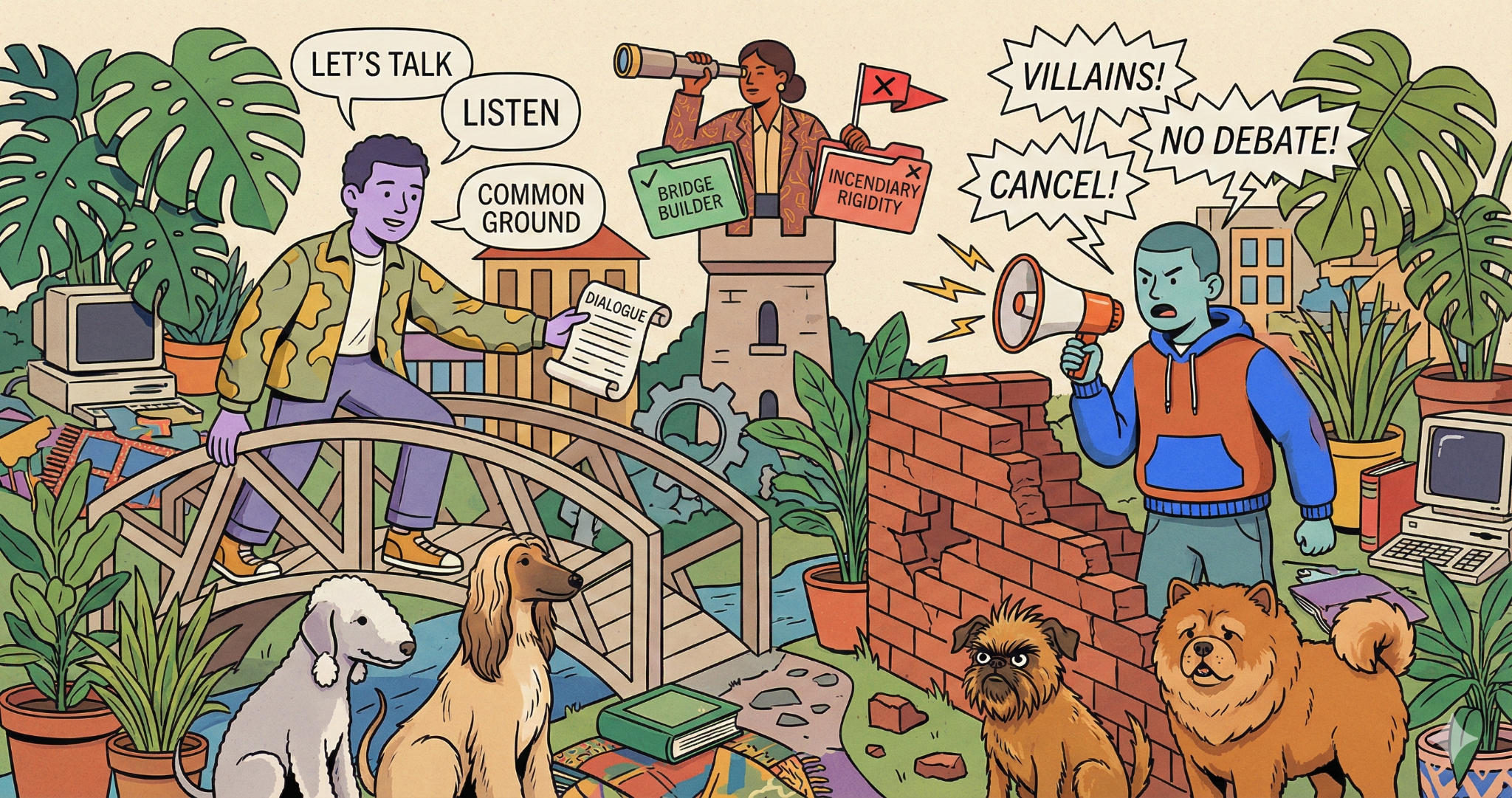
The New "Red Flag" on College Applications
There is a new red flag in college admissions. It is not your GPA. It is not test scores. It is not whether you are political.
It is how you handle conflict.
Elite college campuses are under enormous pressure right now. Between campus violence, escalating protests, federal investigations, donor backlash, and class-action lawsuits brought by Jewish students alleging hostile learning environments, universities have lost tens to hundreds of millions of dollars, not to mention credibility and internal stability. Admissions offices are not insulated from this reality. They are reacting to it.
And what they are quietly screening for is this:
Does this student escalate, or do they stabilize?
This is not about silencing beliefs. Colleges still want students with conviction, values, and intellectual firepower. But what they cannot afford anymore are students who treat institutions as enemies, disagreement as violence, and dialogue as betrayal.
Right now, the fastest way to raise eyebrows in an admissions office is not activism itself, but performative absolutism. Essays that frame the world as villains versus heroes. Social media footprints that show zero tolerance for dissent. Narratives that celebrate disruption without any evidence of repair.
In the current climate, that reads as risk.
Universities have watched protests spiral into lawsuits. They have watched moral certainty turn into exclusion, harassment claims, and federal scrutiny. They have paid real money for failures of leadership, moderation, and judgment. As a result, they are recalibrating the kind of students they want shaping their next four years.
Colleges Want Bridge Builders
That means applicants who can hold strong beliefs and remain in relationship with people who disagree. Students who can argue without dehumanizing. Who can listen without conceding. Who understand that persuasion requires curiosity, not contempt.
Admissions officers are asking questions like:
Can this student coexist with difference?
Do they seek understanding, or dominance?
Do they cool situations down, or light matches?
Are they interested in changing minds, or just calling people out?
Your essays need to answer those questions, even if the prompt does not explicitly ask them.
Here is the uncomfortable part most students avoid. If you genuinely hate people who think differently than you, politically, culturally, or religiously, that energy leaks. It shows up in tone, framing, and word choice. Colleges are not looking to admit students who arrive already at war with their classmates.
They are looking for students who can say:
Here is what I believe.
Here is why I believe it.
And here is how I stay engaged with people who do not.
That combination is rare. It is also exactly what fragile campuses need right now.
So yes, care deeply. Think hard. Write with conviction. But be very intentional about how you present yourself. In this admissions cycle, the new red flag is not passion. It is incendiary rigidity.
The applicants who win are not the loudest. They are the ones admissions committees trust to make campuses stronger, steadier, and more functional.
And right now, that trust is everything.
Post a comment