
5 Colleges That Are Catfishing Students
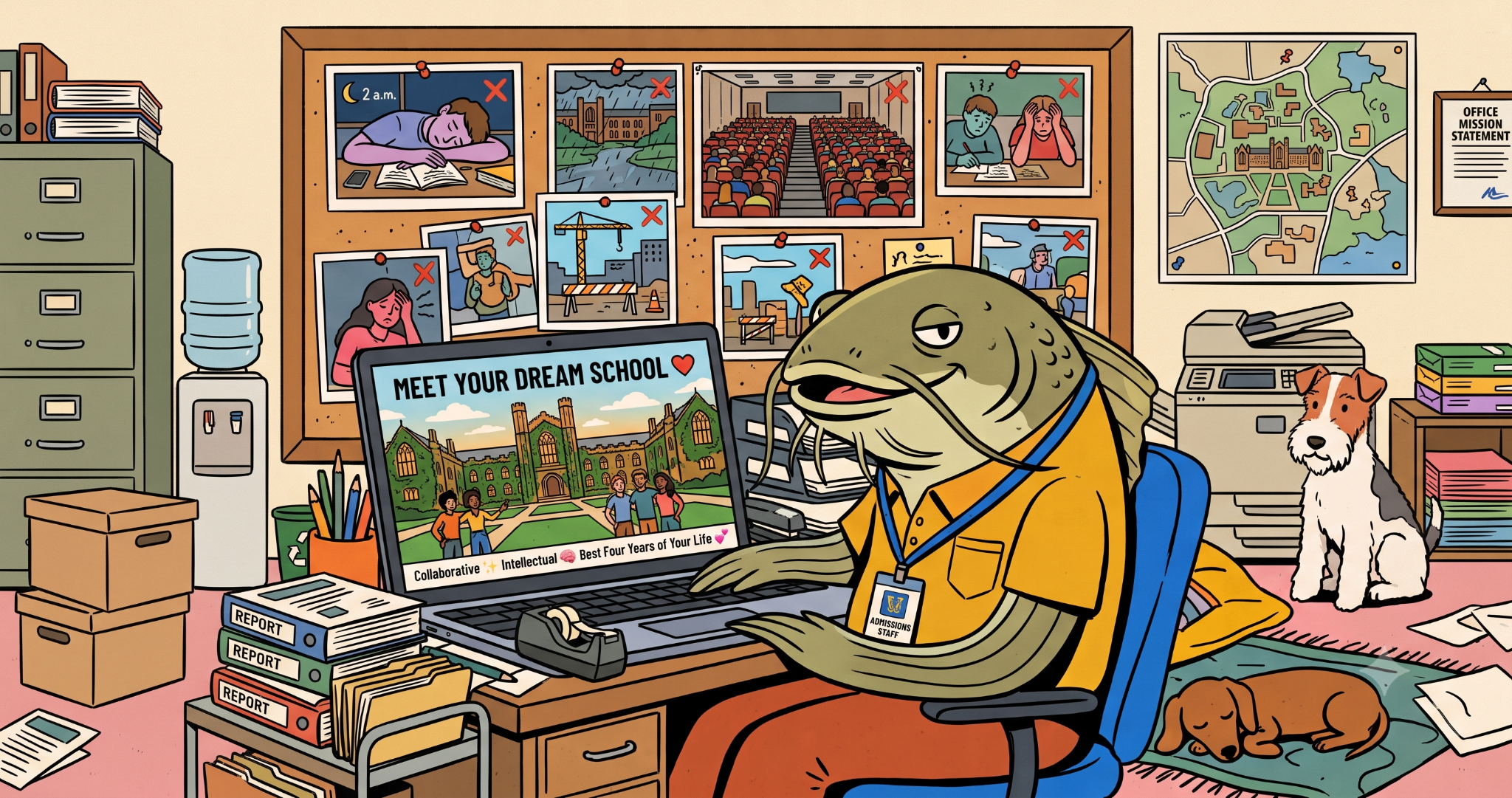
Every year, universities spend millions of $$$ building the perfect “dating profile.”
Professional photographers find their best angles. Videographers capture the campus during golden hour. Marketing agencies write the bio. Social media teams make sure everyone looks suspiciously happy. Tour guides rehearse the opening line.
The goal? Make seventeen-year-olds fall in love.
Because in college admissions, the strongest brand isn’t necessarily the best education. It’s the school that can convince the most students: Wait. This place is literally perfect for me. I gotta apply.
More applicants = lower acceptance rate = more prestige = even more applicants. Suddenly, a school rejecting 90% of the people who want to date it becomes evidence that everyone should want in.
Snag A Complimentary Strategy Session
The problem is that sometimes the profile and the person you actually meet are VERY different.
The Instagram says intellectual paradise. The reality says pre-professional pressure cooker. The brochure says quirky and collaborative. The group chat says everyone is recruiting for consulting. The tour says gorgeous campus in an amazing city. Then you enroll and realize that “in the city” was doing Olympic-level work.
These colleges are catfishing. But you should know what they actually look like before committing four years and $300,000 to the relationship.
Here are the colleges whose marketing departments deserve a raise…and maybe a visit from the truth police:

Brown University
Brown catfishes students as academic Coachella.
Barefoot intellectuals. Poetry on the lawn. Random classes taken because they “felt inspired.” No gen eds. Follow your curiosity. Discover yourself!
The Open Curriculum and Pass/Fail system is real. The chill is not.
But Brown only admits intensely disciplined, self-directed students! Because total freedom means recruiting teens who are so driven, they don’t need any structure.
Yet every year, students tell me they like Brown because it seems “easy.” But an Ivy League school full of self-motivated grinders. They’re not looking for someone who wants the easy way out.

The University of Chicago
If you only looked at UChicago’s marketing, you’d think the student body spends its weekends arguing about whether cereal is soup while wearing tweed jackets and naming their goldfish after Nietzsche.
The essay prompts don’t help. They’ve become internet-famous because they’re weird. How many schools ask you to write about mustard? Or Where’s Waldo?
Families assume the school is basically Hogwarts for quirky intellectuals. But it’s really one of the most academically brutal undergraduate experiences in America. The quarter system moves at breakneck speed, and their Core Curriculum is really hard. That joke that “UChicago where fun goes to die” isn’t a joke. The branding hides the part where everyone is reading three hundred pages a week while trying not to drown.
Students think UChicago wants weird. It wants brilliant. Weird is optional.
Boston College
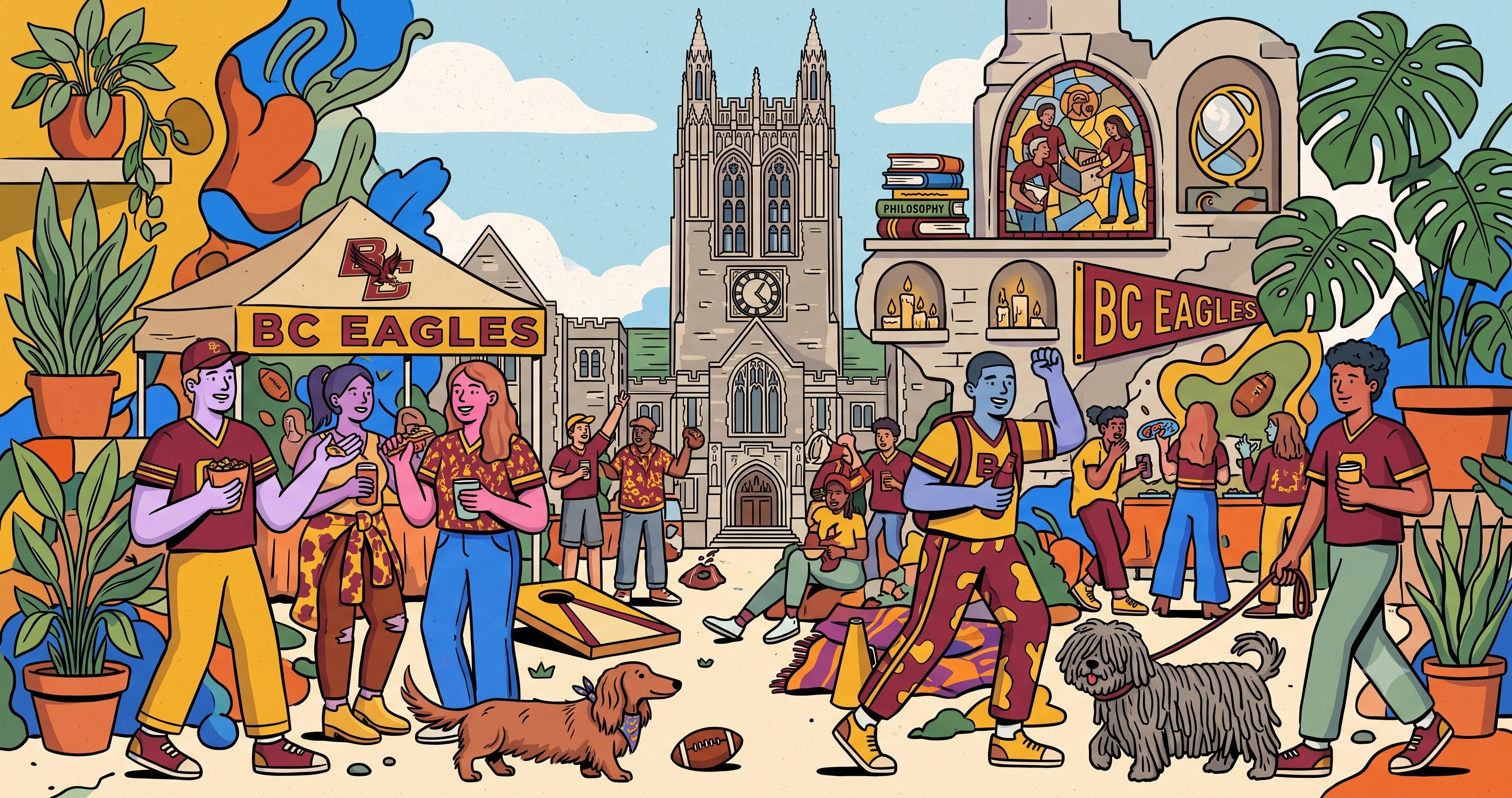
Boston College has somehow catfished applicants into forgetting that it’s a Christian school.
Notre Dame puts the religion front and center. BC sells Gothic buildings, hockey, and a gorgeous campus. Meanwhile, roughly 60% of students identify as Catholic.
BC is Jesuit. Every undergraduate has to take two philosophy courses and two theology courses. You cannot test out of them. Sorry, pre-meds!
Even the supplements quietly screen for fit with Jesuit values. They often ask about service, reflection, community, and purpose without screaming: THIS IS A CATHOLIC QUESTION.
BC is not secretly a seminary. But if you apply thinking it is just “pretty Boston school with hockey,” you did not read the dating profile closely enough.
Washington University in St. Louis
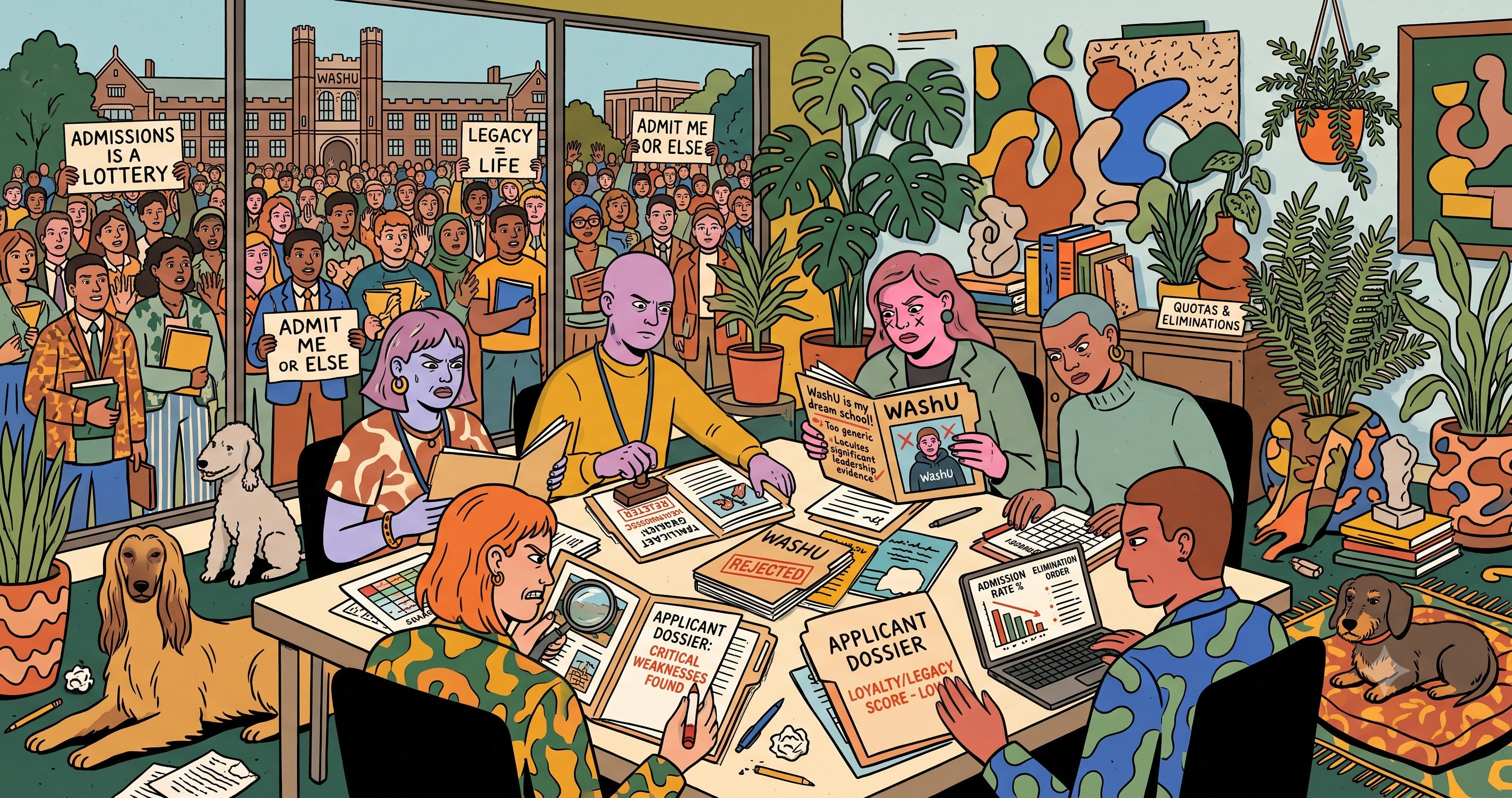
WashU is the catfish where you think they’re more into you than they are.
I love WashU. Great pre-med outcomes, strong culture, loyal alumni. But its warm, collaborative Midwestern branding makes applicants assume it is slightly easier to crack than an Ivy.
It is not.
But WashU is fiercely protective of who they admit; they want kids who truly want them. If admissions suspects you are treating them like a backup, you’re out. They are a big fan of waitlisting people they think are overqualified or too out-of-state to really attend. They heavily track how many times you open their emails, log into their portal, and engage with their campus.
Treat WashU as a backup plan, and skip a bunch of virtual webinars and write a generic essay, you’re ghosted.
University of Michigan & UT Austin
This one isn’t on the universities, but families see “public university” and think “reasonable odds.”
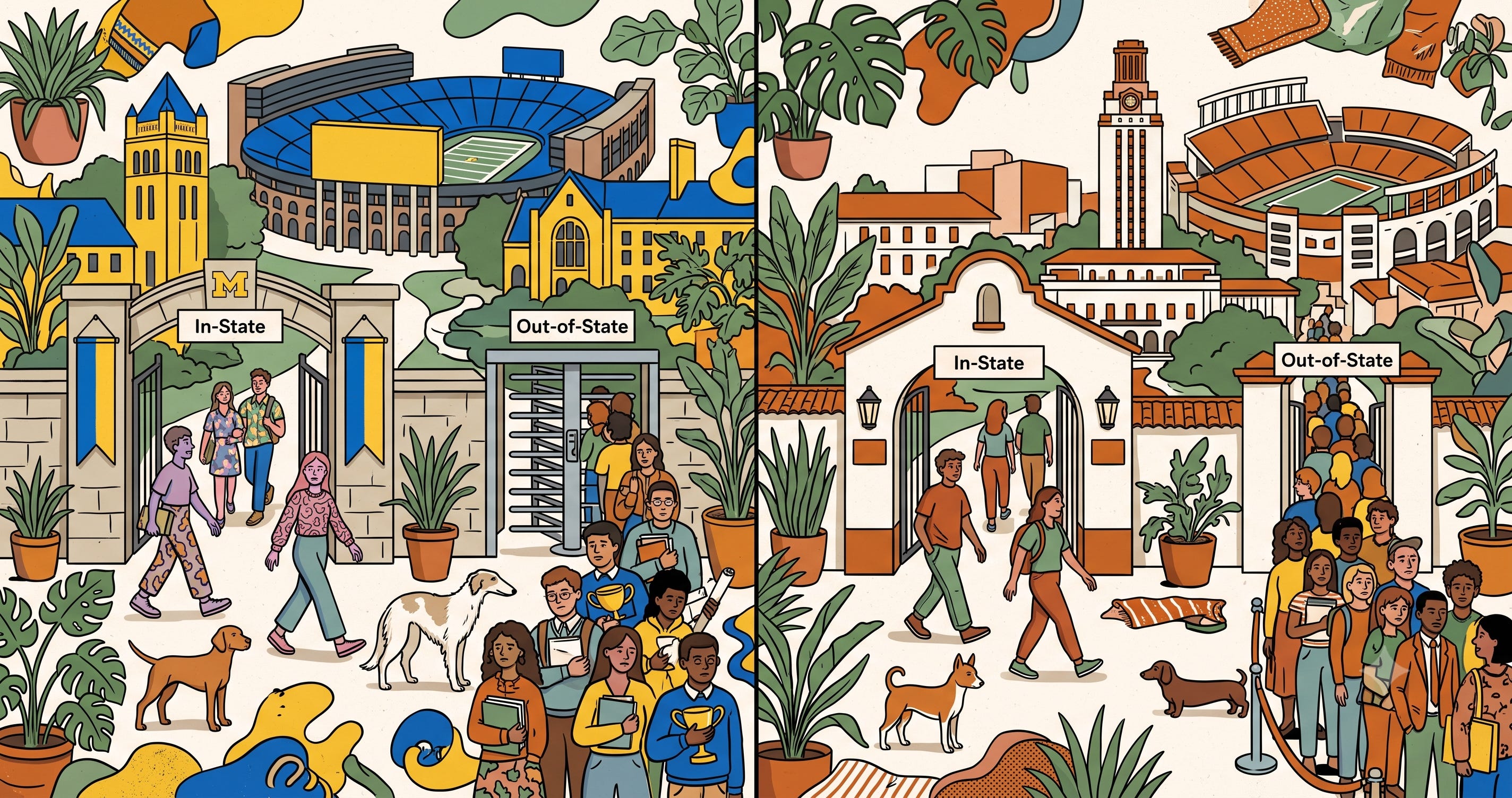
Both of them lean into this work-hard, play-hard image, full of solid classes, great networks, big football games, massive campuses, and tons of school spirit. It all looks accessible. Unless you live in the wrong state.
By law, about 90% of UT Austin’s freshman class has to come from Texas. Many of those spots are automatically filled by top Texas high school students; everyone else (the other 49 states and the entire rest of the world) is fighting over the tiny handful of seats that remain.
Michigan is less extreme, but the dating pool still changes dramatically when you cross the state line. For Fall 2025, 42% of in-state applicants were admitted. Out-of-state? 13%.
So no, an out-of-state applicant is not applying to the same “public university” a local student is. You’re competing against a national pile of valedictorians, 1500 scorers, future CEOs, and engineering protégés. You need elite academics, a painfully specific reason for your major, and essays with absolutely no generic “I love school spirit” garbage.
None of these schools are bad.
I love almost every school on this list. I’ve helped students get into all of them, and I’ve also told plenty of students not to apply because I knew they’d be miserable there.
The problem is when students fall in love with the profile instead of the person.
Every year, I watch students obsess over a version of a college built from campus tours, Instagram Reels, rankings, and admissions brochures. Sometimes they get rejected. Worse, sometimes they get in and realize the school they loved never really existed.
Loving a college doesn’t mean romanticizing it. It means actually knowing it.
That’s one of the biggest things we do at Top Dog. We know an unhealthy amount about these schools: what they value, how they admit, what their culture is really like, and which essays sound great to parents but completely miss the point. Frankly, I’d love to free up the brain space for something more fun.
Because college admissions shouldn’t involve heartbreak. Don’t fall for a school that won’t love you back.
Post a comment